
Table of Contents When to Use PedirIndicative Tenses of Pedir With ExamplesThe Conjugation of Pedir Indicative in Simple TensesIndicative Pedir Present Conjugation ChartIndicative Pedir Preterite Conjugation ChartIndicative Pedir Imperfect Conjugation ChartIndicative Pedir Present Continuous Conjugation ChartIndicative Pedir Future Conjugation ChartIndicative Pedir Conditional Conjugation ChartThe Conjugation of Pedir Indicative in Compound TensesSubjunctive Tenses of Pedir With […]
Master VER Conjugation: Complete Guide for All Tenses

The verb conjugation is one of the most challenging elements of learning Spanish. It can be particularly hard for English speakers as they are not used to so many verb forms in a language. Most Spanish verbs conjugate following a regular pattern, so all it takes to use them properly is to substitute them into […]
Master DECIR Conjugation: Complete Guide for All Tenses

When learning Spanish, probably one of the most challenging things you will encounter is conjugation – and while it’s a matter of understanding the formula with regular verbs, the matter becomes slightly more complex with irregular verbs. Decir is one such verb.However, fear not – at Speaking Latino, our aim is to make both learning […]
Master TENER Conjugation: Complete Guide for All Tenses

For the most part, Spanish verbs are regular, meaning that as long as you know the conjugation formula, you should be good to go. However, life would be too easy if that was the case for all verbs, which is why there’s a group of them called irregular verbs – and tener is one of […]
Mastering Conjugation of “Sentir”: Comprehensive Guide for All Tenses

Did you know that the verb “sentir” (to feel) is one of the most popular and meaningful in Spanish? Well, it is! It’s one of the most versatile verbs out there, it can be used to express a wide range of emotions and sensations. If you’re learning Spanish, it’s essential to delve into the conjugation […]
Master SER Conjugation: Complete Guide for All Tenses

To be or not to be? ¿Ser o no ser? Are you as you want to be? Possibly, when it comes to the verb “ser” in Spanish, it generates many doubts to understand what its conjugation is about. Indeed, the ser conjugations are fundamental for you to learn as a Spanish student. You will use […]
When Teachers Mix Translanguaging and Dialogic Instruction in the WL Classroom
When teachers mix translanguaging and dialogic instruction in the classroom, it’s like turning up the volume on student engagement, critical thinking, and empathy. By giving students the green light to use all their languages and really dig into analyzing texts, teachers create a totally different classroom vibe.
Students can chat away in different languages, it’s not just about learning words—it’s about flexing their brain muscles in all sorts of ways. They’re diving deep into texts, picking them apart, and putting them back together again.
Master Poder Conjugation: Complete Guide for All Tenses

Hello there friends! If you know that “querer es poder” (to want is to be able), then you’ll understand that this poder conjugation is one of the most important in Spanish. The conjugation of “poder” is essential for the Spanish language, as it appears in a variety of contexts useful for effective communication. If you’re […]
Essential 5-Star Books for World Language Teachers ⭐️⭐️⭐️⭐️⭐️

These titles cover critical topics like language acquisition theory, classroom engagement strategies, culturally responsive teaching, and various practical techniques for interactive learning. Other essential reads involve comprehensive approaches to culturally responsive pedagogy and enhancing listening skills.
Evaluating Spanish Class Textbooks (Plus a Checklist to Get You Started)
Choosing the right Spanish class textbook is daunting but crucial as it impacts learning for years. Teachers recommend finding a balanced textbook that integrates comprehensive input, clear grammar, engaging activities, and relevant culture. These Spanish teachers share insights into various textbooks’ pros and cons, helping you making an informed decision.
Los Desafíos Mundiales: 8 Scaffolded Activities for High School Students
Explore global challenges across all student’s level with these activities featuring Puerto Rico and Equatorial Guinea. They will get to explore topics like natural disasters, environmental conservation, social challenges, and cultural aspects. It’s all about real-world issues while improving their Spanish skills.
La Ciencia y la Tecnología: 14 Scaffolded Cultural Activities for High School Students

Ask your students how science and technology have shaped different cultures and societies around the world. And then present them with any of these cultural activities to take them on a journey through time and space to explore the fascinating intersection of science, technology, and culture.
Making Language Stick with Total Physical Response (TPR)

Language learning doesn’t have to be a grind of rote memorization. Imagine a classroom where students are actively moving, engaged, and picking up new words almost as naturally as they did when they were toddlers!
It’s entirely possible with Total Physical Response (TPR), a brain-compatible strategy that not only deepens learner engagement but also ensures the long-term retention of language skills.
11 Teaching Techniques Proven to Make the World Language Classroom More Fun

In language education, using a mix of different methods is key to boosting understanding and keeping students interested. Trying out various teaching techniques gives educators plenty of options to create engaging and effective lessons.
Today, we’ll look at eleven teaching methods, each designed to meet different learning styles and goals. Diving into language learning isn’t just about memorizing vocab and getting the grammar right—it’s also about making the process engaging and fun!
Integrating Socratic Seminars and Artificial Intelligence

The way we teach advanced language and literature classes is changing a lot, thanks to more interactive and engaging methods. One standout approach is the Socratic Seminar, which really helps students dive deep into literary analysis.
Socratic Seminars are even more impactful when combined with the strategic use of artificial intelligence (AI), enhancing both the preparation and execution of educational activities within the classroom.
Digital Organization Mastery for Teachers

A well-structured digital organization system not only saves precious time but also enhances productivity, allowing you to focus on their core responsibilities.
Let’s explore practical approaches and tools that can be utilized to set up a personalized, streamlined digital organization system that caters to individual needs and preferences.
The initial weeks determine the trajectory of the students’ educational experience and are integral to laying a foundation that fosters academic proficiency and productive classroom habits.
Las Familias y las Comunidades: 14 Scaffolded Activities for High School Spanish Students

These activities offer students an insight into the changing family structures in Chile, traditional dances like Merengue, and the vibrant Carnival celebrations of the Dominican Republic. It includes activities on notable Chilean traditions such as Tomar Once, as well as exploration of indigenous communities in Peru.
8 Essential Elements for the First Weeks of School
As the starting whistle of a new academic year sounds, educators are presented with a golden window to cultivate an atmosphere of learning, respect, and community in their classrooms. It’s a time that requires foresight and deliberate action.
The initial weeks determine the trajectory of the students’ educational experience and are integral to laying a foundation that fosters academic proficiency and productive classroom habits.
19 Words for NERD in Spanish
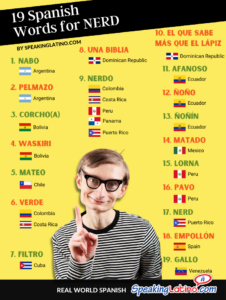
The term “nerd” has evolved from its earlier meanings of social awkwardness and obsessive interest in intellectual pursuits to a more positive label for expertise and passion in a given area.How to Say Nerd in …Argentina – nabo, pelmazoColombia, Costa Rica – verde, nerdoPanamá, Puerto Rico – nerdoPerú – nerdo, lorna, pavoEcuador – afanoso, ñoño, ñoñínBolivia – corcho(a), waskiriChile – mateoCuba […]
How To Say BLANKET in Spanish: 7 Ways
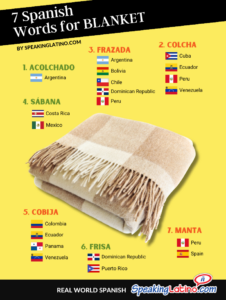
When discussing the term blanket in Spanish, one will encounter a few common words: manta, cobija, and frazada. These words denote different types of blankets used for warmth and comfort. A table helps clarify their usage: manta is a versatile term that can refer to any cloth or covering used in various contexts, not limited […]
How To Say BUS in Spanish
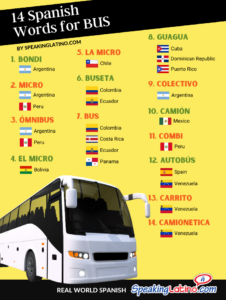
The first and most common way to say bus in Spanish is simply “bus”, pronounced boos. But did you know that depending on where you are in the Spanish-speaking world, the word for “bus” can vary? Here are many of the most common terms for bus used in Spanish-speaking countries. How to Say Bus in […]
Integrating the Stories of Hispanic Women into the Spanish Curriculum: Women’s History Month
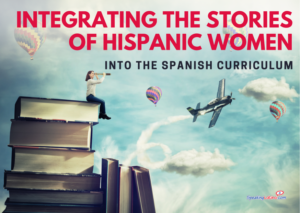
The importance of diversity and inclusion in the classroom cannot be overstated. A comprehensive Spanish curriculum that celebrates the contributions of Hispanic women not only enriches students’ learning experience but also serves as a powerful tool for empowerment and combating stereotypes.
Promoting Inclusivity for All Identities in the Language Classroom
Let’s discuss the various facets of including queer identities in language education, exploring the resistance encountered and advocating for strategies that uphold linguistic liberation and LGBTQ+ inclusivity.
Biographies of Notable Hispanics for the Spanish Class
Introduce students to notable Hispanic figures, including Afro-Latinos, across various fields such as entertainment, literature, activism, and more. Discover the rich cultural heritage and significant contributions of these amazing personalities to enhance the learning experience in a Spanish class.
Engaging Students Through Cultural Connections in the Spanish Classroom
When educators blend culture and language learning seamlessly, they not only enrich the learning environment but also encourage a profound, empathetic understanding of diversity among students.
How To Use AP Spanish Themes Across All Proficiency Levels
By incorporating AP Spanish themes into scaffolded activities early on, we can demystify the perception of AP coursework as unattainable, showing that students can engage with these themes from the very beginning of their language learning journey.
Ideas to Celebrate Black History Month in the Language Classroom

The integration of Black History Month themes offers a unique opportunity to celebrate diversity, explore social justice issues, and highlight the contributions of the African diaspora. By incorporating a range of resources and activities, educators can create an immersive and inclusive learning environment that reflects the cultural and ethnic diversity of students today.
Strategies for Integrating Poetry in the Spanish Classroom
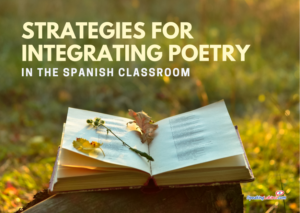
Comprehensible poetry strips away the barriers that often render classical literary texts intimidating for language learners. By offering poetry written with familiar vocabulary and structures, educators help students navigate new linguistic landscapes with confidence.
Teaching Spanish Through Interactive Stations
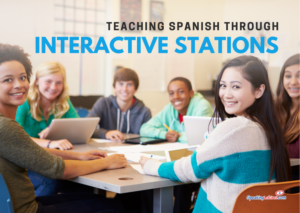
Explore various station-based activities and games designed specifically for language learning and analyze their impact on vocabulary, grammar, reading, writing, comprehension, and conversational skills.
10 Ways to Maximize the Teacher Planning Period and Achieving Work-Life Balance
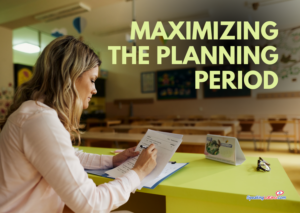
By implementing strategies such as setting priorities, utilizing self-grading methods, creating boundaries, and seeking support, teachers can enhance productivity, reduce workload, and prevent burnout.
You must be logged in to post a comment.